
HarvardMUN Canada 2027 Committees ProgramWORLD HEALTH
ORGANIZATION
WHOGeneral Assembly
The enjoyment of the highest attainable standard of health is one of the fundamental rights of every human being without distinction of race, religion, political belief, economic or social condition.
Serving the Vulnerable: Torchbearers of the Global Right to Life.
The World Health Organization (WHO) is the leading body directing and coordinating international health within the United Nations; founded in 1948 and headquartered in Geneva, WHO plays a key role in tackling global health crises, shaping health policies, and ensuring universal access to adequate care. As one of the UN’s specialized agencies, it operates autonomously under its own constitution, governed by the World Health Assembly, where member states meet annually to set its agenda and budget, while coordinating with the broader UN system through the Economic and Social Council. Its Triple Billion targets frame that mission: one billion more people benefiting from universal health coverage; one billion better protected from health emergencies; and one billion enjoying better health and well-being.
You can contact the dais at who@hmuncanada.org for topic and committee-related inquiries, position paper extension requests and submissions, and conflict-of-interest concerns.
TOPIC AProviding Healthcare Infrastructure in Conflict Zones
TOPIC BAddressing the Medical Geriatric Gap
Committee Resources
To support your preparations, please refer to our resources. Review of the Rules of Procedure and the conference's academic policies is mandatory for all delegates. As the Rules of Procedure may be amended ahead of the conference, delegates are advised to consult our website periodically for the most recent version. Our staff are eager to see the case notes and research binders delegates bring to Toronto.
Conflicts across the globe have resulted in the widespread devastation of health-care infrastructures. Hospitals are being demolished, supply lines for medicines are being cut off, and medical professionals are being targeted. The civilian population within these conflict zones experiences extreme shortages of life-saving medications and treatments, an increased rate of preventable diseases, and extended public health emergencies. In this topic, delegates will work to establish enforceable international protocols that protect medical facilities from destruction, provide safe access to humanitarian organizations during armed conflict, and build stronger, more resilient health care infrastructure in the most affected regions.
Demographic changes caused by improved life expectancy and declining birth rates are causing rapid increases in aging populations worldwide. This has placed significant strain on healthcare infrastructure and supporting social safety net systems in affected nations. Many nations face critical shortages of trained geriatric caregivers, as well as a lack of quality, affordable long-term care options. Millions of senior citizens worldwide are at risk of neglect or receiving subpar care due to the lack of adequate eldercare. In this topic, delegates will develop a strategy to meet the growing needs of the world's aging population by establishing a strong foundation for eldercare infrastructure, increasing the capacity for trained geriatric healthcare workers, and providing accessible, dignified care for those who need it.
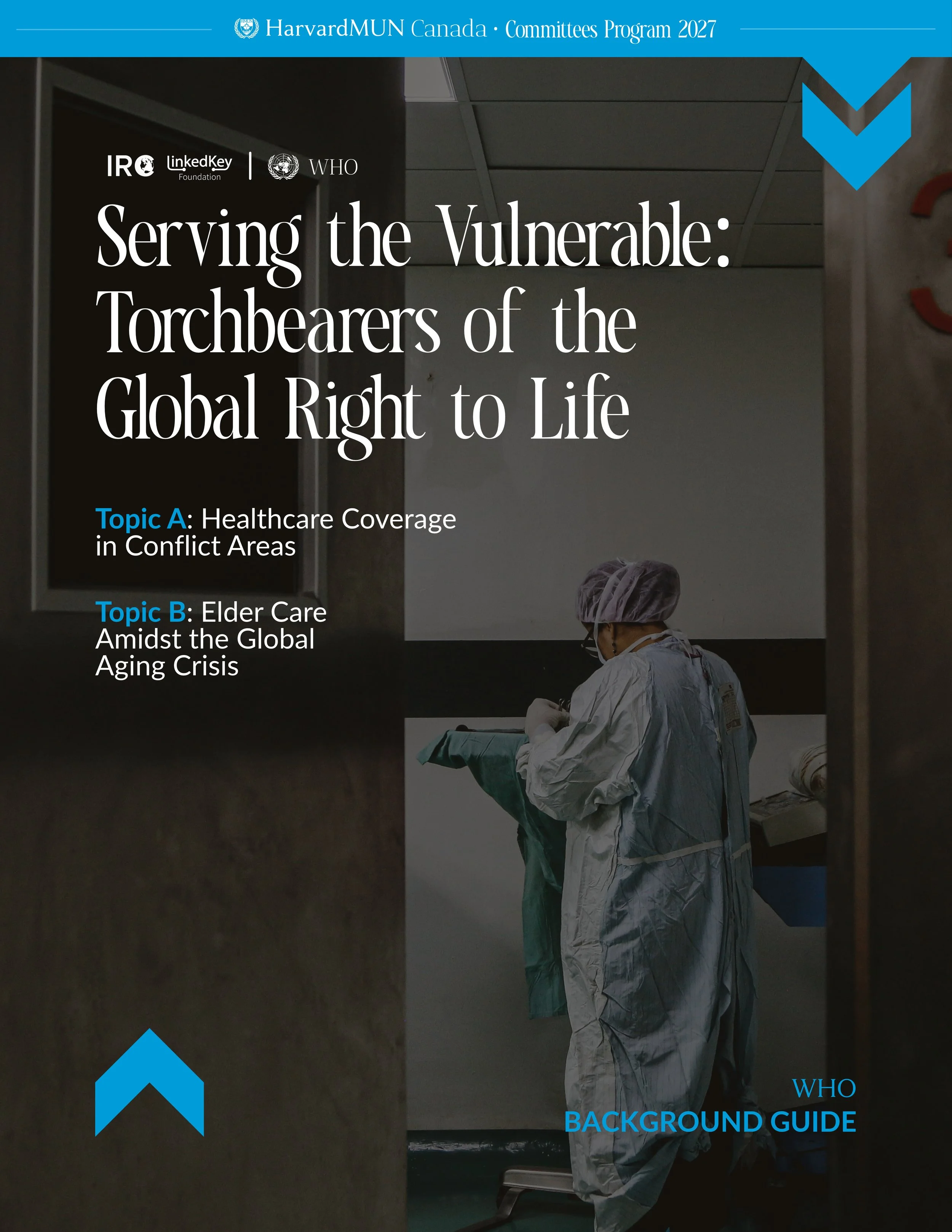
Background Guide (coming soon)
More delegate resources are in the works…